
Painful Periods Treatment in Bhopal can be an important consideration for women who experience recurring cramps, pelvic discomfort, heavy bleeding, or pain that interferes with daily activities. While mild period cramps can be a common part of menstruation, severe or worsening pain should not always be considered normal.
Period pain can vary from woman to woman. Some women experience manageable discomfort for a day or two, while others may have pain that affects work, studies, sleep, exercise, or everyday activities. In some cases, painful periods may also be associated with conditions such as endometriosis, adenomyosis, uterine fibroids, or pelvic inflammatory disease.
Understanding when period pain is within the expected range and when it requires professional evaluation can help women make informed decisions about their health. If menstrual pain is repeatedly affecting your quality of life, consulting a qualified Gynecologist in Bhopal can help identify possible causes and discuss suitable care.
At Maan Hospital, Bhopal, women can discuss menstrual and gynecological concerns with Dr. Viraj Jaiswal and understand whether further evaluation may be appropriate.
What Are Painful Periods?
Painful periods, medically known as dysmenorrhea, refer to cramping or discomfort that occurs before or during menstruation. The pain is generally felt in the lower abdomen and may sometimes extend to the lower back or thighs.
For some women, period pain is mild and manageable. For others, it may become severe enough to interfere with normal activities.
Common symptoms may include:
- Lower abdominal cramps
- Lower back pain
- Pain extending to the thighs
- Nausea
- Headache
- Fatigue
- Digestive discomfort
- Dizziness in some cases
If menstrual pain is persistent or significantly affects your daily life, Painful Period Treatment in Bhopal
may require professional evaluation rather than relying only on home remedies.
Why Do Periods Hurt?
During menstruation, the uterus contracts to help shed its lining. These contractions are influenced by substances called prostaglandins. Higher prostaglandin activity can contribute to stronger uterine contractions and more noticeable cramps.
This type of menstrual pain is commonly called primary dysmenorrhea.
However, painful periods can also occur because of an underlying gynecological condition. This is sometimes called secondary dysmenorrhea.
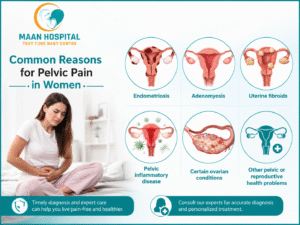
Possible causes include:
- Endometriosis
- Adenomyosis
- Uterine fibroids
- Pelvic inflammatory disease
- Certain ovarian conditions
- Other pelvic or reproductive health problems
Therefore, Period Pain Treatment in Bhopal should be based on the individual woman’s symptoms and possible underlying cause.
When Is Period Pain Normal?
Mild to moderate menstrual cramps can be common, particularly around the beginning of the period. Period pain may be considered more typical when:
- It occurs around
- It lasts for a limited
- It remains
- It does not regularly interfere with daily
- It does not become progressively
- There are no significant additional
However, “normal” period pain is not determined only by how much pain another person experiences. If your symptoms are affecting your everyday life, it is reasonable to discuss them with a healthcare professional.
When Is Period Pain Not Normal?
You should consider consulting a gynecologist when menstrual pain is severe, persistent, or noticeably different from your usual pattern.
Signs that may require evaluation include:
- Severe or worsening cramps
- Pain that prevents normal activities
- Increasingly heavy periods
- Irregular menstrual bleeding
- Pelvic pain between periods
- Pain during sexual intercourse
- Pain while passing urine or stool
- Unusual vaginal discharge
- Persistent pelvic discomfort
- Difficulty becoming pregnant
Women experiencing these symptoms may benefit from Severe Period Pain Treatment in Bhopal after an appropriate medical evaluation.
7 Signs You Should See a Gynecologist for Period Pain
1. Pain Interferes With Daily Life
If you regularly miss work, college, school, exercise, or social activities because of period pain, it should not simply be ignored.
Recurring pain that interferes with your normal routine may require professional evaluation.
2. Pain Is Becoming More Severe
A gradual increase in menstrual pain can be an important change to discuss with a doctor.
If your periods were previously manageable but have become significantly more painful, a Painful Periods Doctor in Bhopal can evaluate your symptoms and determine whether further investigation is needed.
3. Your Periods Are Very Heavy
Heavy bleeding combined with painful periods can occur with conditions such as uterine fibroids, adenomyosis, or endometriosis.
If your menstrual bleeding has changed considerably, discuss it with a Gynecologist in Bhopal.
4. You Experience Pain During Sex
Pain during or after sexual intercourse can sometimes occur alongside certain gynecological conditions.
When painful periods and pain during sex occur together, a gynecological consultation may help identify possible causes.
5. You Have Pain During Bowel Movements or Urination
Pain while passing stool or urine, particularly around menstruation, should be discussed with a doctor. Such symptoms can occur with certain pelvic conditions and may require further assessment.
6. Pain Occurs Between Periods
Period cramps generally occur around menstruation. Persistent pelvic pain at other times of the month may require evaluation.
7. You Are Having Fertility Difficulties
If painful periods occur together with difficulty becoming pregnant, tell your gynecologist. Some conditions associated with painful periods may also be associated with fertility problems.
Conditions That Can Cause Severe Period Pain
Endometriosis
Endometriosis occurs when tissue similar to the lining of the uterus grows outside the uterus. It can affect areas around the reproductive organs and pelvis.
Possible symptoms include:
- Severe period pain
- Pelvic pain
- Heavy periods
- Pain during or after sex
- Pain while passing stool or urine
- Fatigue
- Difficulty becoming pregnant
Not every woman with severe period pain has endometriosis. A medical evaluation is necessary to understand the possible cause.
Adenomyosis
Adenomyosis occurs when tissue similar to the uterine lining grows into the muscular wall of the uterus. It may cause:
- Painful periods
- Heavy menstrual bleeding
- Pelvic discomfort
- Pressure or tenderness
If your periods have become increasingly painful or heavy, discussing your symptoms with a gynecologist may be appropriate.
Uterine Fibroids
Fibroids are non-cancerous growths that develop in or around the uterus. Some women have no symptoms, while others may experience:
- Heavy periods
- Painful periods
- Pelvic pressure
- Abdominal discomfort
- Lower back pain
- Pain during sex
- Fertility difficulties
Women experiencing symptoms may require Menstrual Pain Treatment in Bhopal along with evaluation for possible underlying conditions.
Pelvic Inflammatory Disease
Pelvic inflammatory disease is an infection affecting parts of the female reproductive system. It may cause pelvic pain and can be associated with abnormal vaginal discharge, fever, or pain during sex.
Because infections can require medical treatment, unusual symptoms should not be ignored.
What Is Dysmenorrhea?
Dysmenorrhea is the medical term for painful menstruation. There are two broad types.
Primary Dysmenorrhea
Primary dysmenorrhea refers to menstrual pain that is not caused by another identifiable pelvic condition. It is commonly related to uterine contractions during menstruation.
Secondary Dysmenorrhea
Secondary dysmenorrhea occurs when an underlying gynecological condition contributes to menstrual pain.
Possible causes include:
- Endometriosis
- Adenomyosis
- Fibroids
- Pelvic inflammatory disease
If period pain is new, severe, or progressively worsening, Dysmenorrhea Treatment in Bhopal should begin with understanding the possible cause.
How Is Painful Period Treatment Evaluated?
A gynecological consultation generally begins with a detailed discussion of your symptoms and menstrual history.
Your doctor may ask about:
- When your period pain begins
- How long the pain lasts
- Where the pain occurs
- How severe it is
- Whether it affects your daily activities
- Your bleeding pattern
- Whether periods are regular
- Pain between periods
- Pain during sex
- Urinary or bowel symptoms
- Previous gynecological conditions
- Pregnancy and fertility history
- Medicines or contraception
Depending on your symptoms, your doctor may recommend an examination, ultrasound, blood tests, or other investigations.
Not every woman requires the same tests. Evaluation should be based on individual symptoms and medical history.
What Treatment Options May Be Considered?
The appropriate Painful Period Treatment in Bhopal depends on the severity of symptoms and the underlying cause.
Home Measures
For mild menstrual cramps, some women may find relief from:
- A heating pad or hot-water bottle
- Warm baths
- Gentle walking
- Gentle stretching
- Adequate rest
- Regular physical activity
Medicines
Some pain-relieving medicines may help reduce menstrual discomfort. However, medicines are not suitable for everyone.
Certain anti-inflammatory medicines may not be appropriate for people with particular medical conditions or medication interactions. Therefore, consult a doctor or pharmacist if you are unsure which medicine is appropriate for you.
Hormonal Treatment
Depending on the individual situation, hormonal contraceptive methods may sometimes help reduce menstrual pain.
The choice depends on factors such as medical history, age, pregnancy plans, and other health considerations.
Treatment for an Underlying Condition
When pain is associated with conditions such as endometriosis, adenomyosis, fibroids, or pelvic inflammatory disease, treatment may focus on the underlying condition.
The appropriate approach varies from patient to patient.
How Can a Period Diary Help?
A period diary can help you track your menstrual symptoms over several cycles. Record:
- First day of your period
- Number of bleeding days
- Pain severity
- Pain location
- Amount of bleeding
- Medicines taken
- Pain between periods
- Pain during sex
- Urinary or bowel symptoms
This information can make it easier for your Period Pain Doctor in Bhopal to understand your symptoms and identify changes in your menstrual pattern.

How to Choose a Gynecologist for Painful Periods
Choosing a gynecologist for menstrual concerns involves more than searching for a Best Gynecologist in Bhopal.
Consider whether the doctor:
- Provides gynecological care relevant to your symptoms
- Takes time to understand your menstrual history
- Explains possible causes clearly
- Recommends investigations when medically appropriate
- Discusses treatment options according to your individual situation
- Provides appropriate follow-up when required
At Maan Hospital, Bhopal, women can discuss menstrual and reproductive health concerns with Dr. Viraj Jaiswal.
If you are searching for a Painful Periods Doctor in Bhopal, preparing a record of your menstrual symptoms before the consultation can make the discussion more useful.
When Should You Seek Urgent Medical Attention?
Some symptoms require prompt medical assessment rather than waiting for a routine appointment.
Seek urgent medical care if severe pelvic or abdominal pain is sudden or rapidly worsening, especially when accompanied by:
- Fainting or severe dizziness
- Significant vaginal bleeding
- Fever
- Severe weakness
- Difficulty breathing
- Pregnancy or possible pregnancy with significant pain or bleeding
Do not delay emergency medical care when symptoms are severe or feel unusual.
Frequently Asked Questions – Painful Periods Treatment in Bhopal
1. When should I consider Painful Periods Treatment in Bhopal?
Painful Periods Treatment in Bhopal may be appropriate when period pain is severe, worsening, persistent, or interfering with work, studies, sleep, exercise, or other daily activities. A gynecologist can evaluate the symptoms and determine whether an underlying condition may be contributing.
2. Is Painful Period Treatment in Bhopal necessary for normal cramps?
Painful Period Treatment in Bhopal may not be necessary for mild cramps that are manageable and occur only around menstruation. However, persistent, severe, or disruptive pain should be discussed with a healthcare professional.
3. When should I seek Period Pain Treatment in Bhopal?
You should consider Period Pain Treatment in Bhopal if your menstrual pain prevents normal activities, becomes progressively worse, occurs outside your period, or is associated with heavy bleeding, pain during sex, or other unusual symptoms.
4. What can cause the need for Severe Period Pain Treatment in Bhopal?
Severe Period Pain Treatment in Bhopal may be needed when pain is associated with conditions such as endometriosis, adenomyosis, fibroids, or pelvic inflammatory disease. However, the cause cannot be confirmed from symptoms alone and requires appropriate medical evaluation.
5. Who provides Menstrual Pain Treatment in Bhopal?
Menstrual Pain Treatment in Bhopal can be discussed with a qualified gynecologist. At Maan Hospital, Bhopal, women can consult Dr. Viraj Jaiswal regarding menstrual and gynecological concerns and understand whether further evaluation is required.
6. What is Dysmenorrhea Treatment in Bhopal?
Dysmenorrhea Treatment in Bhopal refers to the evaluation and management of painful menstruation. Treatment depends on whether the pain is primary or related to an underlying condition such as endometriosis, adenomyosis, or fibroids.
7. How can a Gynecologist in Bhopal help with painful periods?
A Gynecologist in Bhopal can review your menstrual history, symptoms, bleeding pattern, and associated concerns and determine whether further examination or investigations are appropriate. Treatment can then be discussed according to the individual situation.
8. When should I visit a Painful Periods Doctor in Bhopal?
You should consider visiting a Painful Periods Doctor in Bhopal when period pain is severe, worsening, affecting your daily routine, or accompanied by heavy bleeding, pelvic pain, pain during sex, or fertility concerns. At Maan Hospital, Bhopal, Dr. Viraj Jaiswal can discuss your symptoms and guide you regarding appropriate gynecological evaluation.
Conclusion – Painful Periods Treatment in Bhopal
Painful periods are common, but severe or disruptive menstrual pain should not automatically be considered something you have to live with. Changes in pain intensity, unusually heavy bleeding, pelvic pain
outside menstruation, pain during sex, urinary or bowel discomfort, or fertility concerns can be reasons to seek professional advice.
Conditions such as endometriosis, adenomyosis, uterine fibroids, and pelvic inflammatory disease can contribute to menstrual pain, but symptoms alone cannot establish a diagnosis. A qualified gynecologist can assess your symptoms and determine whether further evaluation is appropriate.
If recurring menstrual pain is affecting your quality of life, Painful Periods Treatment in Bhopal can begin with a proper gynecological consultation. At Maan Hospital, Bhopal, you can discuss your concerns with Dr. Viraj Jaiswal and understand the appropriate next steps based on your individual symptoms and health history.